by Patty A. Gray, Garden Program Director
 What is a weed? A witty gardener will tell you it is any plant growing in the wrong place at the wrong time. What makes a time and place wrong is when multiple plants are competing for the same small patch of soil nutrients, water and sunlight. If you are trying to grow a row of beans, and an ambitious brigade of sow thistle decides that bean patch is just what it has in its botanical mind for putting down thistly roots, well – you’ve got a plant conflict. A sow thistle is just another green product of nature, but in this context, the gardener sees a weed and yanks it out. Poor sow thistle.
But a gardener who is not only witty, but also savvy, will tell you to prepare the kitchen when you are pulling out some of those weeds. If you’ve been a good steward of the soil and have not used chemical herbicides anywhere in your garden, then you can explore the potential edibility of everything in it. You can go foraging in your garden.
Right now in the Robb Garden is a particularly good time for reaping a windfall harvest of weeds you didn’t plan. The word “windfall” applies quite literally here, since Nature uses the wind to sow her serendipitous crops, sending seeds aloft to seek a cozy patch of soil. Of all the wrong-place-wrong-time plants we have in the Robb Garden, we are lucky to have one that is wonderfully nutritious: purslane.
 Purslane (Portulaca olereacea) is a low-growing plant with small, rounded green leaves and thick, reddish stems. The leaves are slightly succulent, and taste a bit tart, similar to sorrel, with a tang like lettuce. Both the leaves and the stems are perfectly edible, a crisp little snack you can pop in your mouth right in the garden. If you collect a handful of purslane, you can chop it up into any sort of salad; it’s especially good in mustardy potato salad. If you have enough of it, you can fry it up with onions as a side vegetable. It is a common ingredient in cuisines of the Mediterranean region.
Not only is purslane tasty; its nutritional benefits are remarkable. Purslane is an excellent source of omega-3 fatty acids: 100 grams (about 3.5 ounces) of purslane contains 300-400 mg of alpha-Linolenic acid, which is one of the two essential fatty acids (essential because our bodies cannot manufacture it, so we need to obtain it from nature through the foods we eat). Purslane also contains higher amounts of melatonin than other fruits and vegetables. Melatonin is a hormone manufactured in the pineal gland in your brain, and it plays an important role in regulating sleeping and waking cycles. Melatonin also scavenges the free radicals in our bodies that can otherwise cause damage to our cells, which may play a role in the development of cancer. And melatonin has anti-inflammatory properties. So ingesting some extra melatonin in a mouthful of purslane is not a bad idea.
Is there a cultivated garden in your life? Take a closer look at the weedy companions in the garden beds and see if you can identify a friendly purslane plant, waiting to offer you its juicy crunch.
Sources used for this post:
Artemis P. Simopoulos, Dun‐Xian Tan, Lucien C. Manchester, Russel J. Reiter. 2005. Purslane: a plant source of omega‐3 fatty acids and melatonin. Journal of Pineal Research Vol. 39, pp. 331-332.
Gift, Nancy. 2011. Good Weed Bad Weed: Who’s Who, What To Do, and Why Some Deserve a Second Chance. Pittsburgh: St. Lynn’s Press.
Madison, Deborah. 2002. Local Flavors: Cooking and Eating from America’s Farmers’ Markets. New York: Broadway Books.
 From a young age, Dr. Mark Brunell was connected with gardening. His parents were plant lovers; they always had many varieties of flowers planted all over their property; as well as tomatoes that arose from seeds in wine barrels that produced some of the largest, reddest tomatoes Dr. Brunell had ever seen. He grew up and lived in Livermore, California until 2002 when he moved to Stockton to start his teaching & research job at University of the Pacific. At his first home in Stockton, he gardened out of a few planter boxes; but his real passion for gardening began in 2010. By that time, Dr. Brunell had moved into another house in Stockton with a much larger yard, and he also started the University of California Master Gardener program. His enthusiasm for gardening become “white hot” as he endured the “most intensive learning” of his life.
 His home garden is packed together closely in a raised bed with the plants in a hexagonal pattern, but all of the plants have plenty of space for their roots to collect enough water, nutrients, oxygen, and sunlight. He grows a variety of vegetables and fruits on his property, which shifts with each plant’s growing season. One of the greatest issues he faces is that, due to California’s Mediterranean climate, the growing seasons of some plants overlap with another variety of plant that needs to be seeded. Dr. Brunell’s solution to this overlapping issue is to partition his garden beds into sections that correlate to different seasons, which allows the plants currently growing to continue growing without impacting the time at which the new plants are seeded. He only needs to periodically tend his garden, mainly on weekends, because he has a drip irrigation system in place and his garden is fairly low maintenance due to the types of plants he grows in his garden. The only intense care that goes into his garden is when the transition period comes: the old plants are taken out and the new seed is sown.
 I know my grandpa’s backyard like the back of my hand. I spent my childhood freezing my skin off from the ice cold pool shaded by the eight large redwoods that stood proud and tall in his backyard. I have always loved the oddly pleasant smell of lemon-blossom and chlorine that has taken up residence in the air surrounding his ranch style abode. Out of the things I remember about his house in Elk Grove, the most vivid and beloved memory I have is of his garden.
 The words “seed catalogue” would bring to my mind a book, similar to what one might find at a department store, featuring seeds instead of outfits. How anyone could find a picture book of seeds interesting left me befuddled. To me, seeds were simply dried beans that grew into plants with a sprinkle of water and a handful of dirt. Imagine my surprise when I opened my first seed catalogue and learned how to properly care for seeds.
 I was first introduced to seeds when I was about 5 years old during Halloween time. My dad and I were carving pumpkins and he was keeping all the seeds from the insides of them. When I asked about it, he explained to me how they make new plants and eventually pumpkins. It was the way pumpkins had their children, he said. That kind of amazed me, because at five years old I didn’t have any concept of how food was grown. The idea of being able to grow some of the seeds that we collected was very exciting and all I could think about was of all the pumpkins I could grow.
 Some of my first memories are of a messy little garden in the side yard of the first home that I ever knew on Elizabeth Way. It was a small garden, probably no bigger than fifteen square feet. There were tomatoes, potatoes, broccoli, spices and other greens. My mom and I loved our little garden. I remember holding the seeds in my hands when my mom would let me help plant the next round of plants. I would wake up and run down the hall and push away the blinds on the sliding glass door just to look at the progress that our plants had made. I would also try and help water the plants too, but when you are two feet tall you can only reach so far back. I remember one time picking off a tomato and being told to take a bite out of it and absolutely disliking the taste. It gave my parents a good laugh and to this day I still do not like tomatoes. Our garden was beautiful, green, and full of life, unfortunately it’s been years since I have seen my first home on Elizabeth Way and our messy little garden.
 I know you’re young, so you might not understand what I’m about to tell you, but I feel like you should know how I reacted when I held you in my hand for the first time. Holding you was something I’d never done before, and it felt strange to see you resting on my palm. I could barely see you, and I began to worry that you were gone because I dropped you. I was lucky, for I hadn’t dropped you; you were just hidden in the grove of my palm, watching as I panicked and tried to find you.
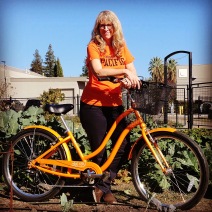 At University of the Pacific, one common experience that all first-year students share is to enroll in a series of courses called The Pacific Seminars, better known on campus as, simply, PACS. These seminars explore the question, “What is a good society?” while developing students’ critical thinking skills about significant personal, social, and political issues by means of extensive writing, reading, and class discussion. These are small-group classes where students get lots of individual attention from instructors and can form a close cohort with their classmates.
 Nature is a gardener. When we leave it alone, Nature produces perfectly sustainable gardens – nothing is brought in, nothing is taken out. Nature’s gardens are not static; they ebb and flow along with patterns in weather and fire and the serendipity of animal visitations. Nor are Nature’s gardens wildernesses – humans have been walking through them since time immemorial, harvesting their bounty, learning from them, imitating them with cultivated gardens.
 As part of the University of the Pacific’s “
